

Top 3 Reasons Why Winter is the Best Time to Prune Trees
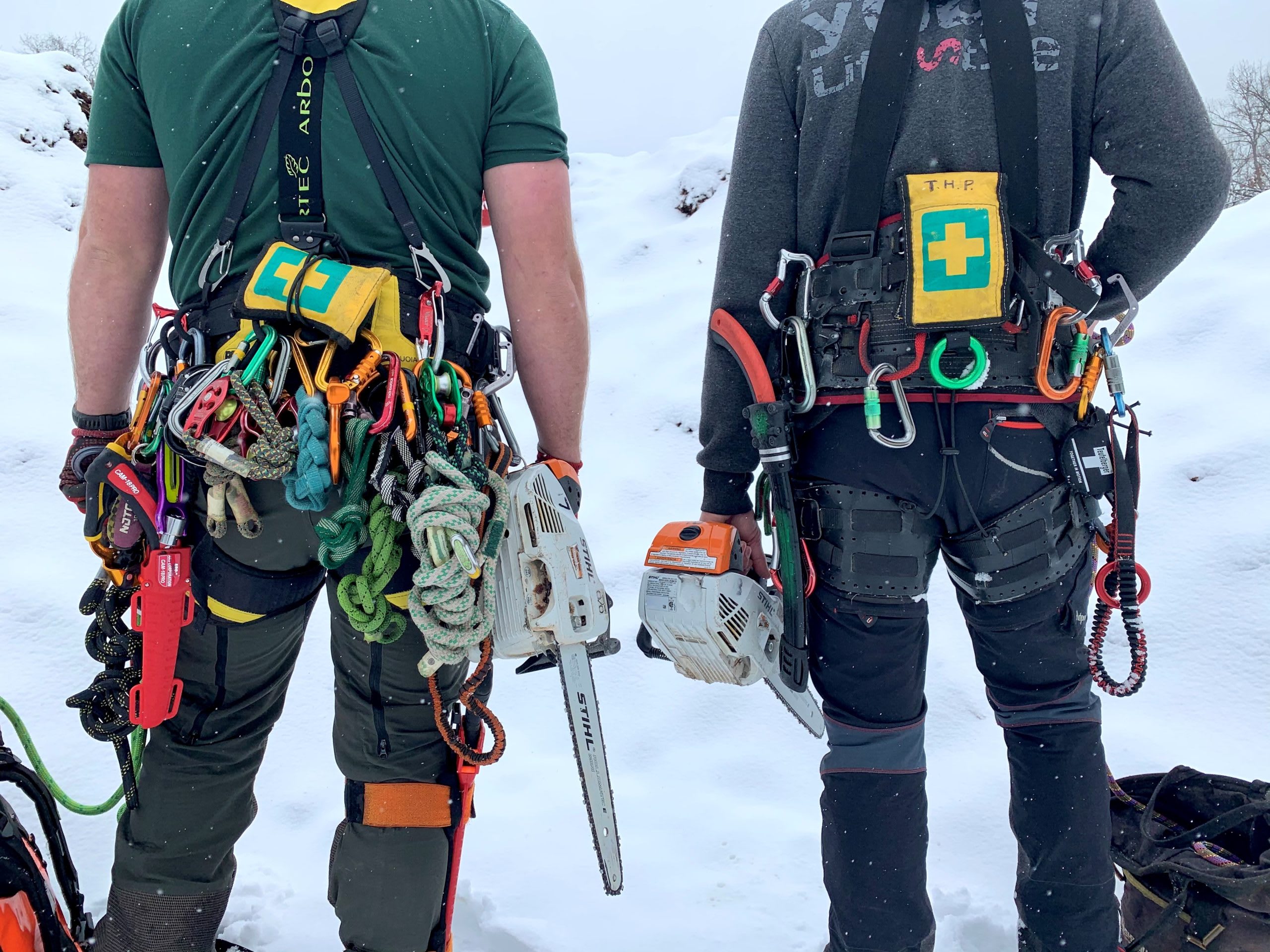
One of the most asked questions we get throughout the year is, “When is the best time to prune trees”? In general, tree pruning can be done in the winter. Here are the top three reasons to prune your trees during the colder months.
1. Prune Trees in Winter to Decrease Hazards
Removing dead, weak, or damaged tree branches can reduce the chance of breakage dangers and storm damage. Many trees are more prone to winter damage from ice and snow. These trees should be pruned in the fall and early winter to prevent ice build-up and potential breakage problems. These include:
- Trees that have been topped, lion-tailed, or have had other bad tree work done in the past
- Trees with included bark and poor branching structure
- Bradford pear, evergreen, and silver maple trees
2. Winter Pruning Improves Tree Health and Structure
Without leaves on the trees, it is easier to see the tree’s structure and assess which branches need to be pruned. This can be especially important for training young trees, which benefit from professional tree trimming ahead of long-term growth. There are two main tree trimming methods to achieve these results:
- Crown reduction pruning – reducing the height and width of the tree can take weight off the ends of the branches. This method can remove heavy or overextended tree branches as well as other significant defects.
- Structural pruning – pruning younger trees can correct structural flaws so they don’t become critical defects with hazardous consequences. An experienced Arborist can judicially select tree pruning cuts for the best results.
3. Minimize Pests and Diseases with Winter Tree Pruning
Insects and disease-causing pathogens are either dormant or less active in the winter. Pruning during this time reduces the risk of introducing pests that could lead to serious issues. This is especially crucial for oaks and elms, as they are particularly prone to diseases like oak wilt, Dutch elm disease, and bacterial leaf scorch. Since these diseases are spread to new trees via small insects which are attracted to fresh cuts on trees, pruning the trees while the insects are either dormant or less active minimizes disease transmission. Trimming in the winter allows time for the pruning cuts to compartmentalize and become less attractive to these insects when they emerge in the spring.
Exceptions to Pruning Trees in Winter
- As a general rule, spring-flowering trees and shrubs should not be pruned in the winter; doing so would remove flower buds. These plants include crabapples, cherries, magnolias, dogwoods, redbuds, and azaleas, among others. We recommend carefully pruning these after their blooms fade and before they fully leaf out.
- If oak, elm, or ash trees need to be pruned in the spring or summer due to hazardous conditions or storm damage, steps can be taken to minimize the risk of disease transmission and pest infestation. Proper cuts on completely dead limbs do not expose living tissue, and pruning spray can make cuts on living wood less palatable to the insects (however, pruning spray does not correct bad cuts, prevent decay, or completely eliminate the risk of disease).
Check with a Certified Arborist from Metropolitan Forestry for Pruning Help
Before pruning any tree, consult with one of Metropolitan Forestry’s Certified Arborists to determine the most appropriate timing for your specific tree species and circumstances. Regular maintenance pruning can prevent major costs of storm damage and reduce hazards to your family and property. Contact us for an inspection of your trees – we can provide recommendations on how to keep them beautiful and healthy.


We were very pleased with the service and particularly the knowledge & professionalism of your staff. We would certainly recommend you.
We are very pleased with the plantings suggested by and picked out by Mike. The men arrived on time to plant the boxwood and witch hazel tree; dug out the stump and cleaned up. They were pleasant and helpful – we couldn’t have asked for a better team.
We were very pleased and impressed with Dan and his team. We love our new trees and garden.
Thank you so much for all the information you provide – the watering information, the emails and the flier. I read it all and have learned so much. My magnolia trees look surprisingly healthy considering the way they looked when I first called.
Kevin Seger provided expert advice and recommendations about tree maintenance and removal. He listened to my needs and provided a thorough and affordable proposal. On the day of the job, I was very impressed with crew leader, Dave and his team (Felix & Adam). They were professional, efficient, hard-working and very neat about clean-up.
An outstanding job on the four trees and clean-up after the work and removal. We would be happy to recommend your services to everyone – the best tree service we ever have had here in St. Louis.
Kevin was able to come out the same day I called and a crew was out the next day! Great prompt service. I was not at home when the work was done but results show they did a fine job.
Everyone came through as usual when I needed the crew to come back & take out the balance of the fire blight. They did not have a bucket the first time and were so nice and professional about coming back again.
Thank you again for responding to our urgent need after the storm took down our 2 trees & deposited them across our driveway. Your crew, as always, did a fabulous job. Professional, courteous & it is a pleasure doing business with your company.
We appreciate your knowledge and professionalism. Your employees are prompt and courteous and willing to do whatever needs to be done to complete the project. Cleanup was great.
